Every organization has someone who knows the building inside and out. They know which contractor to call when the air conditioning stops working, where the water shutoff is located, and which recurring maintenance tasks need attention.
That person may be an office manager, branch manager, maintenance employee, or business owner. Over time, they become the unofficial point of contact for nearly everything related to the facility.
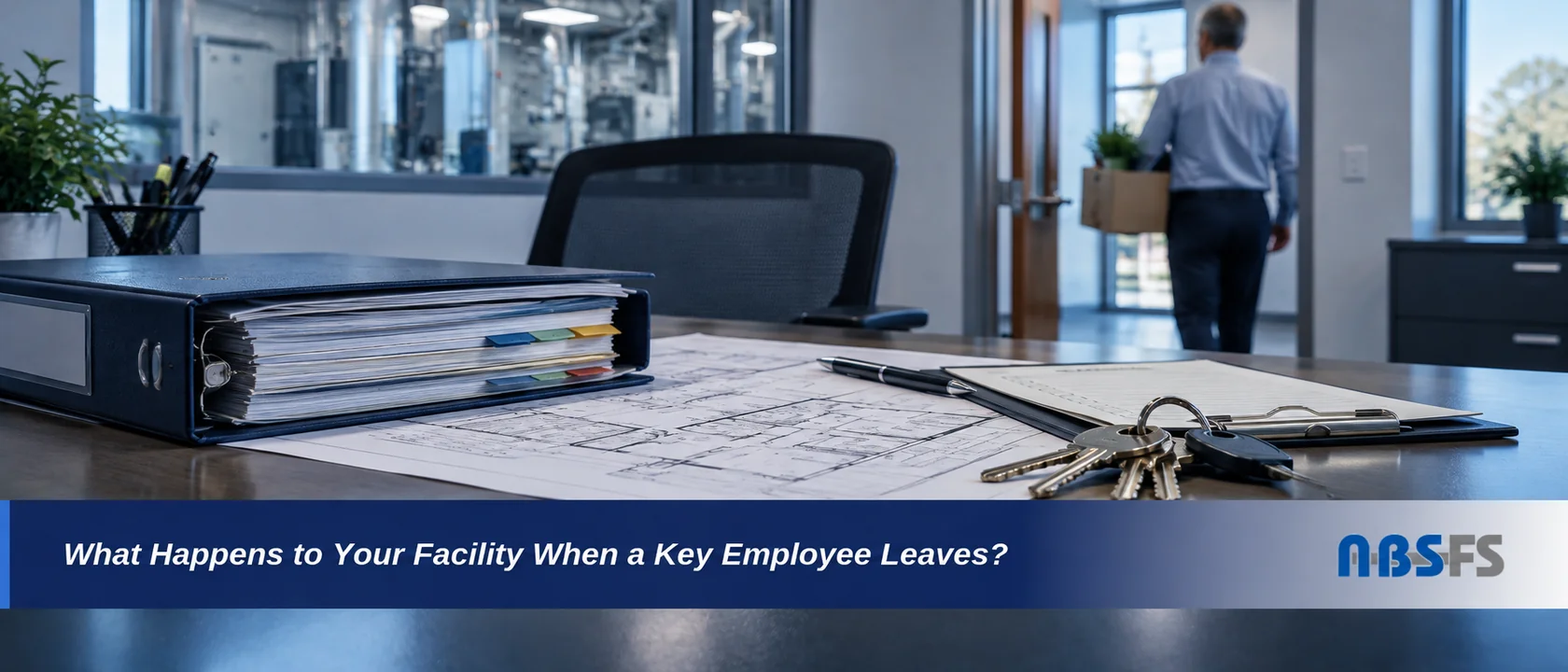
But what happens when they retire, change jobs, or are unexpectedly unavailable?
If essential information lives in one person's memory, even a well-maintained facility can become difficult to manage.
More Than a Vacant Position
Replacing an employee is one challenge. Recovering the knowledge they accumulated is another.
The person taking over may have access to invoices and a list of vendors, but those records may not tell the whole story. Which contractor has been reliable? Was that roof leak permanently repaired, or was the last visit a temporary fix? Who approved the work that is currently underway?
Without clear records, the next person may have to piece together information from emails, phone calls, and conversations with vendors. Meanwhile, the building still needs attention.
Routine services can be missed. Open repairs can lose momentum. Employees may be unsure where to report problems or who has authority to approve the work.
What Information Should Your Company Keep?
A useful facility record should allow another person to step in and understand what needs to happen next. It should include:
- Vendor contacts and responsibilities: Who provides each service, which locations they cover, and how to request help.
- Service schedules: When cleaning, inspections, and recurring maintenance are expected.
- Repair history: What happened, what was completed, and whether follow-up is needed.
- Open requests: Work awaiting approval, scheduling, parts, or completion.
- Equipment information: Model numbers, warranties, service records, and relevant operating instructions.
- Emergency procedures: Shutoff locations, designated contacts, and instructions for urgent situations.
- Approval responsibilities: Who can authorize work and how invoices should be handled.
The information also needs to be current and accessible to the right people. Records stored in a former employee's personal inbox or scattered across several desks are difficult to use when an urgent issue comes up.
Make Reporting and Follow-Up Consistent
Documentation works best when there is a clear process behind it.
Employees should know where to submit facility requests. Vendors should know whom to contact before scheduling work. Someone should be responsible for tracking each request through completion.
When those steps are consistent, a staffing change becomes easier to manage. The incoming employee can see what is happening instead of starting from scratch.
This becomes especially useful for organizations with multiple locations, where each branch may have different vendors, equipment, and outstanding maintenance needs.
How a Facility Management Partner Can Help
A facility management partner can help maintain continuity by coordinating vendors, tracking service requests, and keeping facility records organized.
Your company still makes the decisions about its building and spending. The partner helps carry those decisions through scheduling, communication, documentation, and follow-up.
That support can also make a handoff easier for a new employee. Rather than inheriting a stack of unresolved questions, they have a point of contact and a record of ongoing work.
Start Before a Transition Happens
A simple question can reveal where your company needs better documentation:
If the person who handles your facility were unavailable tomorrow, could someone else keep things moving?
If the answer is uncertain, start with vendor contacts, recurring service schedules, and open repairs. Ask the employee who currently handles these responsibilities to document the details that someone else would need.
Their knowledge is valuable. Capturing it helps protect the work they have already done and gives the next person a stronger starting point.